Class Action Lawsuit Against Goldman Over ABACUS CDO Signals Time Is Right For Investor Lawsuits

The legal news is not good if you are a lender or investment bank who participated in the creation of mortgage-backed securities (“MBS”) and other derivatives over the last few years.  But for investors who lost their shirts through their investments in these derivative products, the chinks appearing in the armor of the nation’s largest banks signal the time is right for aggressive legal action.

In the wake of the charges brought against Goldman Sachs last week by the SEC, Goldman already faces several lawsuits related to the ABACUS 2007-AC1 collateralized debt obligation (CDO) from investors and shareholders.  On Monday of this week, plaintiff Howard Sorkin filed a class action lawsuit (complaint available here) on behalf of all investors in Goldman Sachs common stock for losses stemming from the SEC’s action against the bank.  The suit was filed in the United States District Court for the Southern District of New York and alleges that Goldman knew of the impending SEC investigation as early as July 2009 (having received a “Wells Notice”), but concealed these facts from its investors.

A Wall Street Journal article indicates a similar class action lawsuit was also filed against Goldman this week by a shareholder named Ilene Richman.

Bloomberg reports that Goldman is also facing two derivative lawsuits related to Goldman’s involvement in the creation of subprime mortgage CDOs, with Goldman shareholders claiming that its top executives failed to provide sufficient oversight with respect to the deals.  In derivative actions, the shareholders make a demand upon the company’s board of directors to take action against its executives, and may only bring a lawsuit if the board refuses or is conflicted.  Though these actions against Goldman pertain to their participation in the creation of CDOs in general, facts regarding the SEC’s charges stemming from ABACUS 2007-AC1 should certainly figure prominently in the cases.

Bloomberg also notes that a class action is already pending against Goldman Sachs in federal court in New York.  The action, filed by Public Employees’ Retirement System of Mississippi against Goldman Sachs, Moody’s, Fitch and others (Second Amended Complaint available here), alleges that Goldman misrepresented that certain mortgage-backed securities it sold with high ratings were not of the same quality as other investments with the same ratings. This action has been pending in the United States District Court for the Southern District of New York since July 2009.

This flood of litigation against Goldman comes on the heels of a $600 million settlement entered into by Countrywide in a federal class action lawsuit brought by a group of New York retirement funds.  The deal still requires the approval of several pension boards who are plaintiffs in the case and the judge presiding over the case, but if accepted, it would be the largest settlement to arise out of the wave of subprime securities class actions filed in 2008 (and the 13th largest securities fraud class action settlement in history according to the RiskMetrics’ Group list). This result comes after Countrywide settled a lawsuit with dozens of Attorneys General for well over $8 billion in agreed-upon loan modifications (though readers familiar with this blog will remember that, pending the outcome of an investor lawsuit challenging the settlement, Countrywide stands to bear only a fraction of that cost, as it no longer owns most of the loans at issue).

All this leads me to believe that the time is right for investors with the temerity to take on the major Wall St. banks to file lawsuits to recover their losses stemming from subprime and Alt-A mortgage investment vehicles.  The evidence is overwhelming that lenders misrepresented their quality control standards and guidelines (or did not follow them at all), and thus are on the hook in most cases to buy back deficient loans or replace them with performing mortgages.  Moreover, the recent investigations into the role of investment banks in sponsoring and setting up these deals will provide an additional avenue for attack.  If investment banks knew that they were putting together a “sh***y deal,” as Goldman exec Daniel Sparks characterized a Goldman-sponsored CDO in an email produced to Congress this week, this would open the door to all kinds of claims, from Securities Act and Blue Sky statutory violations to common law contract and misrepresentation claims.

It is facts like these–showing that top bank executives knew the deals they were putting together were doomed to fail–that will turn the tide in investors’ favor.  Though banks have had some success in fending off mortgage crisis litigation thus far by using the “global financial catastrophe” defense, the argument that nobody saw this coming will carry much less water now that it is becoming clear that many–including top bank executives–saw the writing on the wall (read Michael Lewis’ new book, The Big Short, to dispel any notion that this crisis came as a total surprise).  Indeed, in suits filed pursuant to the 1933 Securities Act (even those brought before the SEC action against Goldman hit the news), investors are seeing more success than the mainstream media lets on, according to leading subprime litigation commentator, Kevin LaCroix.

So, for those investors who were waiting for the political and regulatory climate to turn before taking action, here is your wake up call.  With more and more evidence emerging that mortgage origination standards plummeted between 2005 and 2007–and that the investment banks condoned and profited from this irresponsible lending–there has never been a better time to become a mortgage crisis plaintiff.

Posted in abacus, Countrywide, derivative lawsuits, Goldman Sachs, investors, litigation, MBS, SEC, securities, securities fraud, shareholder lawsuits | 3 Comments

Say It Ain’t So: SEC Charges “Shoeless” Goldman Sachs With Setting Up CDO To Fail

In a move that represents a significant and unexpected expansion in U.S. regulators’ efforts to crack down on Wall Street, the Securities and Exchange Commission (“SEC”) has charged Goldman Sachs, Wall Street’s most powerful bank, with fraud over its marketing of a subprime mortgage derivative product.  The complaint alleges that Goldman designed and marketed a “synthetic collateralized debt obligation” (“CDO”) known as ABACUS 2007-AC1 in order to give investor Paulson & Co., Inc. the ability to short subprime mortgage bonds, without disclosing to the bank on the other side of the deal of the bond insurer that was acting as the deal manager that Paulson had shorted more than $1 billion of the securities.  Details of the complaint are still emerging, but this Reuters Factbox contains a good summary of the complaint and the details of ABACUS 2007-AC1.

News of the charges sent most equities and commodities into a tailspin, with the exception of the stocks of some mortgage insurers, such as MBIA and AIG (whose bond insurer, United Guaranty, is involved in several suits with lenders, including Countrywide), which saw gains as investors anticipated that the companies would obtain additional fodder for their active lawsuits against banks such as Countrywide/BofA, Citigroup and Credit Suisse.
At around 4:00 PM EDT today, the Goldman Sachs Group issued the following comments response to the SEC complaint, which were posted at theflyonthewall.com:
We are disappointed that the SEC would bring this action related to a single transaction in the face of an extensive record which establishes that the accusations are unfounded in law and fact. We want to emphasize the following four critical points which were missing from the SEC’s complaint. 1) Goldman Sachs Lost Money On The Transaction. Goldman Sachs, itself, lost more than $90M. Our fee was $15M. We were subject to losses and we did not structure a portfolio that was designed to lose money. 2) Extensive Disclosure Was Provided. IKB, a large German Bank and sophisticated CDO market participant and ACA Capital Management, the two investors, were provided extensive information about the underlying mortgage securities. The risk associated with the securities was known to these investors, who were among the most sophisticated mortgage investors in the world. These investors also understood that a synthetic CDO transaction necessarily included both a long and short side. 3) ACA, the Largest Investor, Selected The Portfolio. The portfolio of mortgage backed securities in this investment was selected by an independent and experienced portfolio selection agent after a series of discussions, including with Paulson & Co., which were entirely typical of these types of transactions. ACA had the largest exposure to the transaction, investing $951M. It had an obligation and every incentive to select appropriate securities. 4) Goldman Sachs Never Represented to ACA That Paulson Was Going To Be A Long Investor. The SEC’s complaint accuses the firm of fraud because it didn’t disclose to one party of the transaction who was on the other side of that transaction. As normal business practice, market makers do not disclose the identities of a buyer to a seller and vice versa. Goldman Sachs never represented to ACA that Paulson was going to be a long investor.
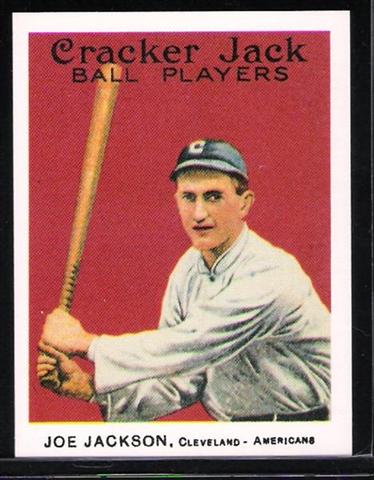
Goldman has repeatedly put forth this type of argument in response to mounting criticism about the bank’s conduct leading up to the financial meltdown (see, e.g., Goldman’s response to allegations in an article in the New York Times to the effect that Goldman used inside information to short the same CDOs it had created).  Namely, that Goldman Sachs would not do anything that would cause it to lose money, that Goldman never discloses who it does business with, and that Goldman only deals with sophisticated investors.  But, these defenses will hold little water if evidence emerges that Goldman knowingly set up a process for creating this CDO that allowed a more favored investor on one side of the transaction to tilt the odds in its favor, or if it turned out that Goldman also bet against ABACUS 2007-AC1.  These sorts of facts would recall images of arsonists burning down buildings to collect insurance or the 1919 Black Sox getting paid to throw the World Series.  Otherwise, it may be very difficult indeed to prove fraud, especially against the strong legal team Goldman is certain to retain.

Paulson & Co., Inc., who made waves by posting yearly returns in the 300-600% range in the aftermath of the global financial crisis by shorting subprime and Alt-A mortgage-backed securities, has not been formally charged with any wrongdoing by the SEC.  However, the company also issued a statement regarding the SEC’s Complaint, which was posted on Dealbreaker this afternoon:

As the SEC said at its press conference, Paulson is not the subject of this complaint, made no misrepresentations and is not the subject of any charges.
While Paulson purchased credit protection from Goldman Sachs on securities issued under the ABACUS ABS CDO program, we were not involved in the marketing of any ABACUS products to any third parties.
ACA as collateral manager had sole authority over the selection of all collateral in the CDO, securities of which were subsequently rated AAA by both S&P and Moody’s.
Paulson did not sponsor or initiate Goldman’s ABACUS program, which involved at least 20 transactions other than that described in the SEC’s complaint.
SOURCE Paulson & Co. Inc.

If the writing wasn’t already on the wall, this complaint makes official the shift in U.S. regulatory policy from one of protecting large Wall St. banks to one aimed at holding them accountable.  This should only encourage mortgage insurers and mortgage bond investors to ramp up their efforts to recover losses from lenders through the courts.  We will certainly be following this story as it develops.

Posted in AIG, CDOs, Goldman Sachs, investors, lenders, MBIA, mortgage insurers, Paulson and Co., regulation, SEC, securities, securities fraud, Wall St. | Leave a comment

BlackRock Puts Pressure On Banks To Absorb Losses

BlackRock, a major asset management firm and one of the largest investors in U.S. mortgage bonds, announced last week that banks would have to absorb the losses on their holdings in second-lien mortgages before it would resume purchasing “private-label” mortgage bonds in any significant quantity.  This represents, to my knowledge, the first instance of an investor threatening to boycott future bond issues as a strategy to solving the gridlock surrounding mortgage-backed securities.

As I’ve discussed in the past, these toxic assets have remained largely illiquid because the players involved cannot agree who should bear losses associated with distressed mortgages.  While loan modifications, short sale programs and other workout plans have been rolled out and encouraged by Washington, banks acting as servicers for the underlying loans have been reluctant to comply due to their large second-lien holdings (that would be wiped out in the event of a modification) and their dependence on the late fees generated by loans in delinquency status.  Such conflicts of interest have thrown a wrench in plans to rescue troubled homeowners, liquidate toxic assets and restart the stalled-out mortgage bond market.

But, now that private investors are beginning to return to the U.S. mortgage market, and there is talk of the issuance of new securitizations, I think investors like BlackRock are making a wise move in leveraging their massive capital (BlackRock manages fixed income investments of over $580 billion) to force banks to write down their second-lien mortgages.  And lest the investor be seen as a bully, let’s not forget that the banks acting as servicers for these loans were often the same institutions whose lending arms irresponsibly created these loans in the first place.  When you throw in the fact that second-lien loans are structured to take the first loss in the event of default, and that these servicers should be working in the best interests of investors to modify loans pursuant to their contracts and their servicing obligations, BlackRock’s position seems imminently reasonable.

[Thank you to Chris Corio for bringing this story to my attention – IMG]

Posted in allocation of loss, BlackRock, conflicts of interest, investors, irresponsible lending, junior liens, loan modifications, MBS, securities, toxic assets | 1 Comment

Federal Home Loan Bank of San Francisco Sues Over RMBS Losses As Investor Actions Build Steam

One month ago, with the filing by the Federal Home Loan Bank of Seattle of eleven lawsuits against the major Wall Street creators of residential mortgage-backed securities (RMBS), I speculated that the floodgates of investor litigation may finally be swinging open. Yesterday, the filing by the Federal Home Loan Bank of San Francisco (“FHLB of SF”) of two lawsuits seeking the rescission of over $19 billion of purchases of RMBS made it official–the flood is upon us.

The lawsuits (copies posted here and here) were filed in San Francisco Superior Court against a laundry list of the most prominent subprime and Alt-A securitization masterminds, including Deutsche Bank, J.P. Morgan, Bear Stearns, Credit Suisse, Royal Bank of Scotland, Morgan Stanley, UBS and Merrill Lynch. Both actions contain claims for relief based on violations of the California Corporations Code for untrue or misleading statements (CCC sections 24501 and 25501), the Securities Act of 1933 for untrue or misleading statements in registration statements (Section 11) and in the sale of securities (Section 12(a)(2)) and for liability of controlling persons (Section 15), and common law and statutory claims for rescission and negligent misrepresentation. The FHLB of SF is represented by Grais & Ellsworth LLP, a New York litigation boutique, and Goodin, MacBride, a small San Francisco shop. Grais & Ellsworth, which is emerging as a major player in RMBS bondholder litigation, also represents the FHLB of Seattle in the investor action filed last month, as well as Greenwich Financial in its suit against Countrywide (see complaint here, link to attorney David Grais discussing the lawsuit here, and a collection of my prior postings on the lawsuit here).

In a statement issued yesterday, the FHLB of SF confirmed that it was seeking to rescind its purchases of 134 securities in 113 securitization trusts, for which the Bank paid more than $19.1 billion. The statement went on to note that, “[a]ll of the [private-label RMBS] in the Bank’s mortgage portfolio, including those identified in the complaints filed today, were rated AAA when purchased, based on the information provided by the securities dealers. The Bank employs conservative criteria and guidelines for all its MBS investments.”

Though these lawsuits are certainly the largest RMBS investor lawsuits stemming from the financial crisis, they follow on the heels of several similar actions filed since the year began, including an action by the the International Union of Operating Engineers-Employers Construction Industry Retirement Trust against UBS and others in the District Court of New Jersey and an action by Footbridge Limited Trust against Countrywide/BofA and others in the Southern District of New York.

The FHLB of SF complaints read more like educational pieces about investing in asset-backed securities than claims for securities fraud. They are long on explanations about the creation of securitizations, the players involved and the sale of securities, but short on factual allegations about the misrepresentations underlying the bank’s causes of action. The basic allegations as to each claim and each Defendant are that 1) the Defendants made representations in RMBS prospectuses that underlying loans would meet certain quality control standards and underwriting guidelines; 2) these statements turned out to be false because the originators were actually making frequent and unjustified exceptions to these guidelines and failing to follow quality-control practices to detect fraud; and 3) these misrepresentations materially increased the risk of the certificates.

Yet, from my reading, the only facts or evidence that the FHLB of SF has to support its claims is that the loans in the pools that have been foreclosed-upon sold for a fraction of the value ascribed to them, and further, that an analysis of an industry-standard database of securitized loans reveals that the drop in value could not have been caused by the decline in the housing market. (All of these allegations as to particular securitizations are contained in numerous “Schedules” attached to the complaints. I’ve posted a sample of one such Schedule here, which appears representative of the voluminous attachments.)

Were you expecting more? I was. It’s not everyday you see a major institutional investor with tens of billions of dollars under management file a lawsuit against nine
of the largest investment banks in the world on circumstantial evidence. Granted, these complaints were far more streamlined, logical and understandable than the eleven rambling, 80+ page complaints filed by the FHLB of Seattle last month (a sample of one such complaint–against Credit Suisse–is posted here). But, couldn’t the bank have alleged more details about the underwriting of the underlying pool of loans, including the percentage that contained underwriting defects or the instance of borrower fraud found therein? Not if they don’t have the underlying loan files.

What I realized is that one of the biggest battles raging right now behind the scenes between RMBS investors and servicers/lenders is the battle over loan files. Servicers, who often originated these abysmal loans, and who are currently suspected of additional malfeasance in the servicing of these loans (see prior articles here and here), are loathe to turn over loan files that would reveal the depths of their depravity. And securitization trustees, the only players with the authority to obtain loan files and enforce servicer obligations, are incentivized by the structure of most securitizations to be passive and averse to confrontation.

So, the likely answer is that the FHLB of SF and other RMBS investors have been denied the underlying loan files necessary to determine how bad the underwriting and servicing of these loans has really been. With statutes of limitations deadlines likely approaching, they have been forced to file suit before having all the facts and hope that they can gather hard evidence in discovery. If they can’t, plaintiffs like the FHLB of Seattle and SF will have a very hard time overcoming a motion to dismiss, let alone obtaining a verdict in their favor.

Posted in bondholder actions, Complaints, Federal Home Loan Banks, Grais and Ellsworth, incentives, investors, lawsuits, rescission, RMBS, securities, securitization, servicers, Wall St. | 7 Comments

Home Loan Bank Lawsuit May Signal Floodgates Opening For Investor Actions

As reported this week in the Wall Street Journal (article available here, with subscription), the Federal Home Loan Bank of Seattle has filed separate lawsuits against 11 different Wall Street firms, alleging that it was misled about the quality of over $4 billion in mortgage-backed securities. The lawsuits, filed in King County Superior Court in Washington, seek to force the firms to repurchase these securities, plus interest. The largest of the lawsuits pits the Home Loan Bank of Seattle against Bear Stearns, Co. (now owned by JPMorgan Chase & Co.) and seeks the repurchase of $719 million in securities bought between March 2006 and September 2007, which feature a foreclosure rate of over 25%, according to the suit.

Is this the beginning of the flood of investor lawsuits that we have been anticipating since this crisis began unfolding in 2008? Some commentators think so. Bert Ely, a banking consultant based in Alexandria, VA is quoted in the WSJ article as saying that, “[o]ther similarly-placed investors would take note, both in the U.S. and outside.” Christopher Whalen, managing director for Institutional Risk Analytics said that a ruling against the Wall St. firms would “start a stampede” by other investors.
I have long been predicting that we would see a wave of investor suits, based upon the well-documented decline in underwriting standards from 2006 to 2008, the skyrocketing delinquency rates resulting from this abdication of underwriting and the resulting losses in pools of securitized home mortgages, and the fact that large institutional investors held significant stakes in these pools. But, up to now, such suits have been few and far between.
The WSJ article suggests that this has been because of the time-consuming and expensive audits of loan files that would be required to demonstrate underwriting deficiencies. But, this tells only part of the story. Another reason for the delay is the fact that institutional investors tend to hold the most senior tranches of certificates in securitizations, and these tranches have only just begun to experience losses. This delay in the recognition of losses has been compounded by the Financial Accounting Standards Board’s change in the mark-to-market rule last year that allowed banks to avoid writing down the value of its MBS holdings if it stated that it had the intent and ability to hold onto the assets until their value recovered. Though this rule bought investors additional time to attempt to negotiate with intransigent servicers, investors are beginning to realize that the only way the value of these assets will ever recover is through concerted action or through the courts.
Finally, the political element to this issue cannot be ignored. As discussed previously, the major servicers (generally large Wall Street banks), wield incredible political clout in Washington and have had the ability to alter the regulatory landscape in their favor thus far to avoid the consequences of their irresponsible lending and their self-interested servicing. So long as Washington was catering to servicers and offering the carrot rather than the stick to induce loan modifications, investors hung back, not wanting to appear to be standing in the way of keeping families in their homes. But, now that the political tide has begun to turn against servicers (see articles here and here), investors have become emboldened.
Once investors come to the conclusion that their losses from MBS will not be mitigated through patience or negotiation with securitization trustees and servicers, they will find that their only options are firing those entities, or filing lawsuits. And I am confident that if investors choose to go down the path of investigating the loans underlying their MBS holdings for the purposes of litigation, they will find a mountain of evidence of underwriting deficiencies, and strong legal support for putting these loans back to those who created them in the first place.
[Special thanks to Ken Hausman, Doug Winthrop and Michael Ginsborg for contributing to this article – IMG]
Posted in Bear Stearns, Federal Home Loan Banks, investors, irresponsible lending, lawsuits, litigation, mark-to-market accounting, RMBS, securities, securitization, servicers, underwriting practices, Wall St. | 2 Comments

The Federal Reserve’s Secret Lending of Public Money Is Under Attack

What follows is an article by Carolyn Austin (contact the author), which was first posted on the Wall St. Cheat Sheet and has been reprinted here with permission. The article discusses an interesting bill being proposed in the House (HR 1207) that calls for a third-party audit of the Fed. I have created a tracker on the right side of this page to follow the progress of this bill, which raises an important debate about whether the Fed should be subject to increased oversight, especially at a time when Congress is also debating giving the private institution more power to regulate banks.
[Editor’s Note: because the original link to Alan Grayson’s views on HR 1207 in Ms. Austin’s article appears to be broken, I have replaced it with a short clip of Grayson speaking about the bill on the floor of the House. Thanks to Damien Hoffman for submitting this article and for posting several articles from The Subprime Shakeout on Wall St. Cheat Sheet.]

*****

Tags: , , , ,

Massive amounts of taxpayer $$$ are flying out the door like monkeys from Oz. Americans simply want to know: Who got our money?

Rather than answer our question, personal enrichment schemes by public officials and bankers dominate the news. Until now Washington has continued the same rhetoric: Let the markets judge while the priests of high finance decide in secrecy.

However, Congressmen Ron Paul and Alan Grayson are leading a popular charge to pass a bill which will mandate a third-party audit of the Federal Reserve. The House is set to vote on H.R. 1207 in the near future — so start paying attention.

Call me crazy, but is it unreasonable to ask, “Why can’t (or won’t) the Federal Reserve account for secret loans equivalent to more than $1 Trillion?” We’re asking for only transparency, not lawmakers dictating interest rates. Isn’t transparent economic activity the hallmark of a democratic society? Let’s hear the experts’ opinions:

Tim Geithner 270

Timothy Geithner doesn’t think the Fed should be transparent:

http://s.wsj.net/media/swf/main.swf

Alan Grayson DR

Congressman Alan Grayson thinks the Fed must be transparent:

Posted in Alan Grayson, Federal Reserve, legislation, oversight, Ron Paul, Timothy Geithner | Leave a comment

Bondholders Considering Plan to Tell Servicers: “You’re Fired!”

With lawsuits against servicers grinding a slow path through the court system, investors are looking to make an end-run around the intransigent banks who are refusing to service mortgages in accordance with bondholder wishes. Their solution to break through the gridlock surrounding so-called “toxic” mortgage-backed securities? Use the mechanisms in their pooling and servicing agreements (PSAs)–the agreements that govern the creation, maintenance and payment streams of mortgage-backed securities–to remove conflicted servicers from their roles and insert friendly institutions willing to service the loans consistent with the best interests of the investors.

According to one group of prominent investors (hereinafter the “Securitization Syndicate”), who asked to remain anonymous because the plan is still in the works, investors with large holdings in mortgage-backed securities (MBS) are beginning to join forces to petition securitization Trustees to relieve Master Servicers from their posts. Under the terms of most PSAs (which tend to vary little from trust to trust), the Master Servicer is required to service loans in such a way as to maximize investor returns. However, due to recognized conflicts of interest (such as significant holdings in junior mortgages and an interest in accumulating fees from delinquent loans), servicers instead have frequently breached these obligations and refused to liquidate or modify loans that borrowers are incapable of repaying.

The problem is that, under the terms of most PSAs, the only party with the power to do anything about a breach of an obligation by a Master Servicer is the Trustee. Trustees are generally large financial institutions that are paid a fee to oversee the flow of money through the securitization waterfall and to carry out certain administrative tasks. Though the Trustee may remove a Master Servicer, because the Trustee was designed to play a fairly passive role, it is not required to enforce servicer breaches on its own initiative.

Instead, bondholders must petition the Trustee to take action. In this regard, most PSAs require that at least 25% of the Voting Rights (evidenced by beneficial ownership of 25% of the bonds) give notice to the Trustee of a breach by the Master Servicer before triggering any obligations by the Trustee. Only when the Trustee fails to remedy the breach within 60 days after such a petition may the bondholders bring legal action on behalf of the Trust.

However, most PSAs also provide the following: “The Holders of Certificates entitled to at least 51% of the Voting Rights may at any time remove the Trustee and appoint a successor trustee.” (quoted from the representative PSA for Countrywide Alternative Loan Trust 2005-35CB) Anticipating that the Trustee will not take action against the Master Servicer, and reluctant to engage in yet another protracted legal battle to enforce servicers’ obligations, the Securitization Syndicate is shooting for a more ambitious goal: amass a 51% interest in one securitization so that they may remove the Trustee, appoint a friendly successor, and get that successor to fire the Master Servicer.

Sound difficult? It will be. Most prudent investors seek to diversify their holdings so that they do not hold too high a percentage in any one securitization, let alone any one asset class. Finding a few investors with large enough holdings in one particular securitization to obtain 51% might be a challenge. However, it turns out that several large institutional investors, drawn by mortgage-backed securities promising double-digit returns from an investment-grade rated product, acquired substantial holdings in single MBS trusts. Thus, it may be the case that by encouraging just two or three of these large funds to join forces, the Securitization Syndicate may be able to hit the 51% hurdle.

According to one member of the Securitization Syndicate, “all it takes is one or two funds that get it. What do you think will happen if we tell a Trustee or a Master Servicer, ‘you’re fired’? What will happen the next time we notify a Trustee that we’ve caught a servicer breaching its obligations? I think you’ll find they begin to sit up and take notice.”

I would tend to agree that a single firing would cause a sea change in loan servicing policies. Many large banks earn significant fees from serving as the Trustee or Master Servicer of securitizations, and would not want to lose those revenues. Yet, surprisingly, the biggest challenge to this plan may be prodding institutional investors–those who stand to benefit the most from replacing the Trustee and Servicer–to take action. Up until now, institutional investors have been reluctant to take on the Big Four Banks, with which they have longstanding relationships, or to risk being portrayed as self-interestedly opposed to politically popular loan modifications.

Nevertheless, as losses mount in the MBS portfolios of these pension funds, insurance funds and the like, and especially now that senior tranches of securities in certain MBS trusts are beginning to take a hit, somebody is going to be willing to go out on a limb. Large funds such as CalPERS, whose investment portfolio took a hit of over $56 billion in the last fiscal year, should be eager to find a way to cut their losses and begin liquidating their large holdings in mortgage-backed securities.

With Treasury officials admitting last month to the failure of their efforts to cajole servicers into modifying loans or working with borrowers to allow short-sales (the sale of the property for an amount less than the amount owed on the mortgage), maybe institutional investors will finally take matters into their own hands. And, just one reported instance of this plan being successful will likely create a chain reaction. Soon, many bondholders will be open to joining forces and taking on Servicers and Trustees who aren’t honoring their contractual obligations.

In the meantime, loan modifications or workouts, which require the cooperation of servicers, will grind forward at a snail’s pace. This is because servicers have the sole power within a trust to modify a loan, foreclose, or allow a short sale, and they have generally been responsible for dragging their feet and keeping these loans in stasis. When servicers refuse to service loans in the best interests of the ultimate owners, which they’re contractually-obligated to do, they should be shown the door just like anyone else that fails to perform their basic job functions. The question is whether any institutional investors will have the courage to break ranks and stand up to banks that have demonstrated unparalleled influence in Washington and on Wall Street.

Posted in banks, CalPERS, fiduciary duties, Investor Syndicate, investors, loan modifications, pooling agreements, securities, securitization, servicers, short-selling, toxic assets, Treasury, Trustees | 2 Comments

Wikipedia Loan Modification Page Offers Concise Look at History and Current Programs, Ignores Government Failures

I get frequent questions about loan modifications and resources for learning more about available programs. Those interested in learning more about this subject at the heart of the current financial crisis should start with the Wikipedia page entitled “Loan Modification in the United States.”

The page traces a brief history of the use of loan modifications during the Great Depression, then launches into a more substantive explanation of the factors that brought about the housing crisis in the late 2000s and the legislative efforts that have been made to use loan modifications to mitigate the effects of this crisis. Unfortunately, the page leaves out any mention of the many failed programs by which the government has sought to encourage modifications, such as the Helping Families Save Their Homes Act, which attempted to shore up the equally ineffective Hope For Homeowners Act. Moreover, the brief section entitled “Analysis of the results of the government-sponsored programs” gives little indication of the abject failure of these programs to reduce foreclosures.

Indeed, even the cash incentives in the Helping Families Save Their Homes Act have not compelled banks to perform as many modifications as Washington would like. As discussed in a recent article in The Huffington Post, Treasury Secretary Michael Barr said last week that, “The banks are not doing a good enough job. Some of the firms ought to be embarrassed, and they will be.” So, the Treasury’s solution is to compel action by public shaming? What Barr fails to discuss or maybe even recognize is that regulators have been pursuing this tactic for some time now, apparently without much success.

The alternative that was originally suggested as part of the initial government bailout, and which I have been advocating for months now, is to use TARP funds to create a new version of the Home Owners’ Loan Corporation (HOLC). Many readers will recall that the government established the HOLC in 1933 to refinance the loans of distressed borrowers to help avert foreclosures. The HOLC came to own nearly one fifth of the home loans in America but was ultimately able to sell off the loans and any underlying properties acquired via foreclosure—and even turned a small profit—when the market stabilized. In the present case, though this solution does not appear politically palatable, there is good reason to believe that an entity that could afford to hold these loans for long enough could recoup a significant portion of its investment (or even a profit) when the housing market recovers. Moreover, the government is probably the entity best equipped to cut through the red tape surrounding workouts and mediate between the various players involved in the securitizations containing most of the loans at issue. By utilizing its powers under the Takings Clause and paying just compensation to injured investors or lenders, the government could compel loan modifications that it determines will serve the public interest.

Otherwise, the only solution that makes sense at this point is to tilt the cost-benefit analysis being performed by banks by hitting them where it hurts–in the pocketbook. Washington has tried the carrot, now maybe it’s time to try the stick. Instead of giving servicers cash incentives to modify, try fining them when they don’t. The Treasury is already fining servicers for not reporting final disposition of their trial modifications, but again this strategy seems to be aimed at encouraging better behavior by publicizing intransigence. While I’m a big fan of this sort of reflexive incentive system where companies depend on repeat patronage by customers, servicers do not face the same fears of public scorn because borrowers cannot choose who is servicing their loan. And in this financial climate, it is wishful thinking to believe that those seeking a loan will shun the Big Four banks because of their abysmal record in performing loan modifications. Instead, the decision of who to go to for a mortgage is likely driven by who will approve the borrower for a loan at the best rate.

Though legislators and Wikipedia may pay lip service to the many programs Congress has rolled out to encourage modifications, there is precious little evidence that these programs are actually working. It has been nearly a year since the bailouts and other responses to this financial crisis began; it is high time that Washington abandon its gentle prodding and take a more direct approach to reducing foreclosures.

Posted in banks, Helping Families Save Homes, HOLC, Hope For Homeowners, incentives, loan modifications, Michael Barr, reflexive tactics, securitization, Takings Clause, TARP, Wikipedia | Leave a comment

Treasury Official Speaks Out About Excessive Risk Taking

At long last, someone in Washington is speaking out about the dangerous precedent set by the government bailouts of major banks. As discussed in this article on the financial regulations website FinReg21, Treasury secretary Michael Barr testified before the House Judiciary subcommittee that the government must enact meaningful reforms to combat the “classic moral hazard problem” that stems from the perception that some banks are too big to fail.

Moral hazard defines the concept that an actor who is insulated in some way from risk will often behave in a riskier or more aggressive manner as a result of that insulation. The classic example is that drivers wearing seat belts and bikers wearing helmets tend to drive and bike more aggressively than they would have if unprotected, thereby leading to more accidents than before. Applied to the banking industry, Barr’s reference to moral hazard suggests that banks (and their creditors) that are perceived as “too big to fail” (i.e., the government will bail them out rather than letting them fail) will be incentivized to engage in greater risk-taking behavior than they would have if there had been a credible fear of failure.
Examples abound of this type of perverse incentive system within the financial services industry. One need look no further than the examples of Freddie Mac and Fannie Mae, which continued to receive support for their risky mortgage-backed securities purchases from investors because it was thought that the government would guarantee the debts of these GSEs. Similarly, the performance of executives of financial institutions is scrutinized on a quarter-by-quarter basis, meaning that these executives must show constant short-term profits to retain their jobs. They are then rewarded for these short-term profits with huge bonuses. On the flipside, unless criminal or grossly negligent behavior can be shown, these executives are rarely liable for any losses the firm experiences because of their choices. Though they may lose their jobs, these executives generally retain the bonuses they’ve received, thus incentivizing highly risky behavior during their tenures.
The incentives for both executives and the institutions they direct must be restructured so that long-term profit and steady, sustainable growth is most richly rewarded, while wild volatility is discouraged. This must begin with erasing the notion that any institution is “too big to fail.” Beyond the moral hazard problem, the fact than any institution would be so critical to our economy that its failure would wreak havoc must be considered extremely dangerous. If the American economy is viewed as a portfolio of investments, then there must be sufficient diversification between industries and within industries such that the failure of one may be balanced against the others. Having our economy hinge on the success or failure of any one institution, let alone a highly leveraged institution such as a bank, is as bad a strategy as it would be for an individual to have his entire retirement account consist of holdings of Google stock.
So, what does this mean? If a bank or any other institution takes risks that don’t pan out, it must suffer the consequences. If it cannot overcome the losses from its risk-taking behavior, it must be allowed to fail. As Barr points out, this “failure” must consist of an orderly unwinding of assets, rather than a sudden collapse, as was the case with Lehman. But, it also cannot be a bailout. Investors must lose a portion of their investment, so that they will be incentivized to direct their resources towards companies that engage in prudent behavior. Upstart institutions must be allowed to sprout in the void left by the failed institution, replacing some of the lost jobs and services and encouraging a return to a survival-of-the-fittest brand of capitalism.
Consistently applying this approach over time will naturally lead to more conservative investments and decisions, but also to more realistic valuations. We all saw how unchecked risk-taking in mortgage lending led to highly inflated home prices that could not be supported and eventually came crashing down.
Now, I recognize that many will point to the failure of Lehman Brothers as an indication of why we should not let big financial institutions fail. Obviously, the failure of Lehman touched off a wave of financial disasters that pushed our economy into recession. The resolution authority proposed by Barr may be part of the answer to this objection. Yet, who can say that this recession was not an inevitable result of too many dollars chasing too little actual value? Would this recession really have been avoided if Lehman were propped up by the taxpayers instead of forced into bankruptcy? I think that to blame the financial crash on the fall of Lehman is to mistake a symptom for a cause. It is like saying that the Great Depression was caused by the stock market crash of 1927.
Further, reforming the bankruptcy process for major financial institutions is only part of the solution. A complete solution must involve a drastic reformation of executive compensation structures to reflect an emphasis on long-term value. Instead of basing executive bonuses on quarterly or yearly performance, have executive bonuses “vest” over a five-year period, provided that the executive remains employed with the company, and that the company (or the executive’s department or division) has shown a net profit over that period. This would incentivize both long-term planning and company loyalty.
While I applaud Barr for admitting the dangers of government bailouts, his proposed solution does not go far enough. Further, as I’ve discussed in the past, allowing the Fed to retain the authority to decide when this resolution authority is applied and withheld gives too much power to a private corporation with a vested interest in preserving certain large banks. There must be a better way.
Posted in bailout, executive compensation, Fannie Mae, Federal Reserve, Freddie Mac, Government bailout, incentives, Judiciary Committee, Lehman Brothers, Michael Barr, moral hazard, too big to fail, Treasury | Leave a comment

Countrywide Files Motion to Dismiss in Greenwich Financial Case

With Greenwich Financial v. Countrywide having been remanded to New York state Supreme Court, Countrywide has now filed a Motion to Dismiss, arguing that Greenwich Financial’s Complaint is barred by the operative securitization agreements. As discussed in several prior posts, Greenwich brought this suit to force Countrywide to pay for the loans it has agreed to modify pursuant to its settlement with dozens of state Attorneys General. Countrywide’s full memorandum of points and authorities in support of its Motion to Dismiss may be found here.

Countrywide’s Motion asserts that the terms of the Pooling and Servicing Agreements (PSAs)between investors and Countrywide, including the “No-Action” provisions, expressly prevent Greenwich from suing to force Countrywide to repurchase the loans it modifies. Interestingly, while Countrywide cites the Housing and Economic Recovery Act and Helping Families Save Their Homes Act to show that such modifications are within “standard servicing practice,” Countrywide does not argue that Greenwich’s suit is barred by the Servicer Safe Harbor. Instead, Countrywide asserts that while it will brief such matters in future filings, “[b]ecause the immunity question requires consideration of additional documentation…Countrywide does not raise the immunity defense in this motion.” I’m curious what documentation Countrywide will have to review to brief this issue, as the Servicer Safe Harbor seems to have been designed specifically to relieve servicers such as Countrywide from liability based on contractual provisions like the ones in the PSAs.

As I discuss in an article that was recently published in the Daily Journal (an online version of which is available here), if Countrywide is successful when (not if) it eventually argues for dismissal based on the Servicer Safe Harbor, the decision could expose the Servicer Safe Harbor to a constitutional challenge pursuant to the Fifth Amendment’s Taking’s clause (see prior discussion here). If Greenwich Financial is thereby forced to bear losses that it expressly contracted against, it may constitute unconstitutional loss-shifting from one private party to another for a public purpose, in which case the government would be required to provide investors with just compensation.

Nevertheless, it will be interesting to see how Greenwich responds to the instant motion to dismissed based on the language of the PSAs. From my prior analysis of these contracts, it appeared that their language strongly favored holding Countrywide liable for the costs of such modifications.

Greenwich v. Countrywide had been stayed over the summer while the federal court to which Countrywide had removed the case deliberated over whether Greenwich’s case raised a federal question, or otherwise was subject to federal jurisdiction based on its securities class action claims. On August 14, Judge Richard Holwell issued an opinion remanding the case to state court. Judge Holwell found that there was no federal question jurisdiction because the issues of the Servicer Safe Harbor and other federal statutes relied upon by Countrywide would be asserted merely as defenses, and were not essential to Greenwich’s claims. The court further found that the case fell into one of the exceptions to mandatory federal jurisdiction under the Class Actions Fairness Act, and while the issues raised in the case were timely and novel, this was not enough to mandate federal jurisdiction. The full order is available here.

While Countrywide states that it intends to appeal Judge Holwell’s order of remand, it appears that Countrywide will move forward with its defenses on the merits in state court. Check back for further updates on this fascinating case.

Posted in consitutionality, Countrywide, Greenwich Financial Services, Helping Families Save Homes, HERA, loan modifications, motions to dismiss, remand, Servicer Safe Harbor, subprime, Takings Clause | Leave a comment